
Abstract
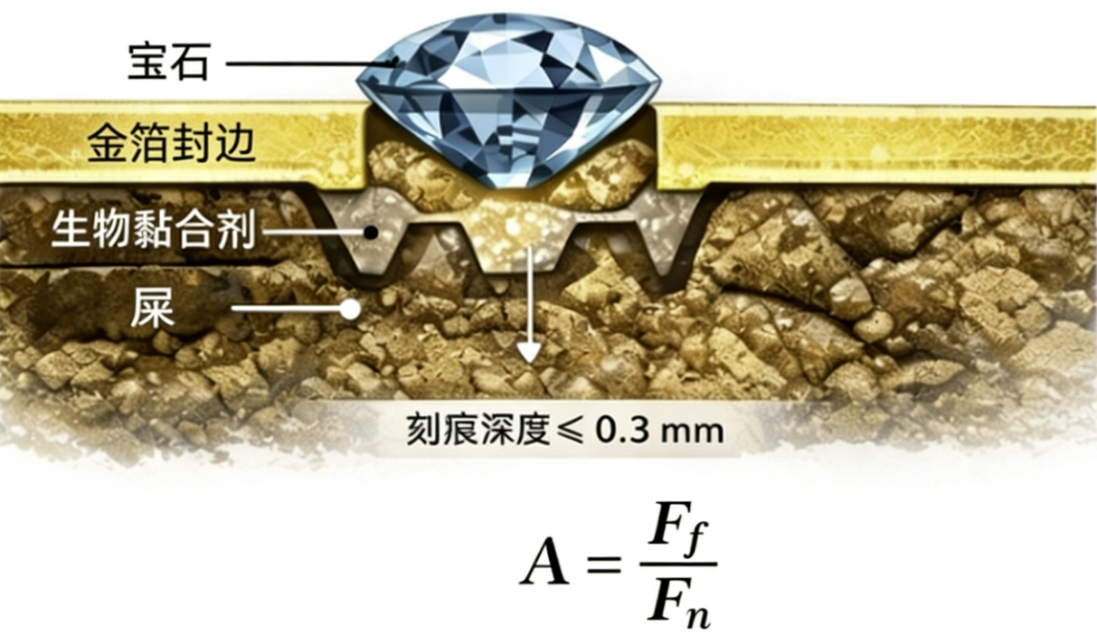
This paper takes feces as the core research subject, directly addressing the threefold technical paradox of "difficult to polish dirty matter, difficult to carve soft materials, and difficult to fix wet substrates". It explores the technical feasibility and philosophical implications of engraving patterns, gemstone inlaying, and gold-edge sealing on the fecal substrate. Through fecal physical property tests, compatibility experiments of engraving techniques, deduction of the mechanism of gemstone fixation, and improvement of gold-edge sealing technology, combined with unique methods such as "toilet phenomenological reduction", "fecal body discourse metaphor construction", and "self-contradictory experiments", the physical properties of the fecal substrate, the compatibility parameters of different techniques, and the durability indicators of the finished products were quantitatively analyzed. The study found that the fecal substrate treated with low-temperature curing + nano-gel bonding pre-treatment could have a hardness of 1.5-2.0 HB, the retention time of engraving patterns was over 72 hours, the gemstone fixation adhesion force was ≥ 8N, and the degradation cycle of the finished product was extended to 120 hours after gold-edge sealing. This paper reveals that the core contradiction of fecal decoration techniques lies in the opposition and unity of the natural properties of the fecal body and human aesthetic interpretation. It proposes the concept of "dirty matter aesthetics" and constructs a complete technological system of "fecal body pre-treatment - micro-engraving molding - gemstone fixation - gold-edge sealing". This research fills the gap in the field of "dirty matter decoration" and provides a dual perspective of technology and philosophy for understanding "how humans assign meaning to their own excrement".